
Walt Disney World and Disneyland raised ticket prices for 2026, and predictably, some fans came out of the woodwork to defend the decision. They explain why even at the higher costs, Disney theme parks are a great value as compared to other entertainment options. Others do the exact opposite, complaining about any and all higher prices.
I hate all of that. So naturally, I’m going to join them and do the very thing I decry! But instead of engaging in some free PR for the big corporation or point out the obvious that paying more stinks, I’m going to dig a little deeper and provide context. I’m not starting this post with a preordained conclusion, or emphatic yes (or no!) to the titular question.
Walt Disney World and Disneyland will outperform some forms of entertainment. But I’m not going to cherry pick the choices or frame this analysis in the best possible light to reach the invariable conclusion that Walt Disney World and Disneyland offer great per-hour value for money. At the risk of stating the obvious, the parks are more expensive than a lot of things.
For the sake of this analysis, we’re going to look at a median single day ticket for 2026, which costs approximately $185 at Magic Kingdom or $180 at Disneyland. Note that we’re using the two castle parks for the ease of comparison and because they’re far and away the most popular and iconic.
It’s worth noting that Disneyland has a wider range for ticket prices: $104 to $224, whereas Magic Kingdom’s range is $139 to $209. The reason the median is higher for Magic Kingdom is because the distribution of dates skews that way.
Both coasts increased prices for 2026. Walt Disney World broke the $200 barrier for the first time, while Disneyland went from $206 to $224 for its highest-priced tickets. Both only have this high of prices around Christmas and New Year’s, but there are many dates a rung or two below this during peak weeks (read: school breaks) throughout the year.

Nevertheless, there is the question of how much these sticker prices are actually relevant for the type of guest who is concerned about squeezing as much bang for buck as possible from the parks. Disney has arguably overshot the market with ticket prices, the result of which is that discounts are becoming increasingly common.
We joke about Disney studying at the Kohl’s Business School where sticker prices are rendered meaningless by discounts, and it’s sorta true. Higher base prices create the appearance of better deals. It’s always been the case that both coasts discounted tickets to in-state residents, and obviously, those are not accessible to anyone. But we’re seeing more and more deals that are.
Current deals include the deeply-discounted Disney+ 3-Day, 3-Park Walt Disney World Ticket for 2026 and Deep Discount on Disneyland Kids Tickets in 2026. There’s also a California resident deal for Disneyland tickets that drops the per-day cost to $68 or less.
That’s the lowest price we’ve seen over a decade, and that’s without even adjusting for inflation. This is just the start of the 2026 Walt Disney World and Disneyland ticket deals–we’re expecting more to come after the holidays since neither coast has any big attractions opening in 2026. If you want the cheapest day or trip, you’ll probably want to target summer vacation or the early fall off-season, which should see the most aggressive discounts.

When it comes to pricing, it’s also worth acknowledging the difference between a single day ticket and a 4-night vacation. The latter is significantly cheaper on a per-hour basis, but more expensive as a whole. That would be a fair analysis because Walt Disney World has 4 theme parks and is a vacation destination, but it ceases to be an apples to apples one with other entertainment options.
Then again, if Walt Disney World and Disneyland fans want to play the multi-day comparison game, they really should do so with other vacation destinations and not entertainment. That doesn’t happen because the results suddenly aren’t nearly as favorable. If people knew just how (in)expensive it is to visit the U.S. National Parks or even that Tokyo Disney Resort is cheaper than Walt Disney World…they might do that instead!
In any case, it’s impossible to do The Math™️ on a full vacation package on a per-hour basis. It’s probably sufficient for this post to point out that vacation packages cost much less per hour but much more overall. For more thorough analysis, we’ll refer you to How Much Does a Walt Disney World Vacation Cost? for the breakdown.
This simply determines the per-hour value of a single day in Walt Disney World or Disneyland. This might seem like a simple matter of taking the per day costs above and dividing that by the number of operating hours in a day, right?
It’s tricky. Most guests don’t arrive at park opening and staying until park closing. The average person experiences a sporting event or concert in full, whereas they spend X number of hours per visit at a place like a theme park or museum.
Moreover, this type of assessment overlooks the amount of time spent waiting in line at theme parks. If I go to a Taylor Swift concert, I’m going to encounter lines to buy merchandise, food, and for the restrooms or whatever. But the song “Anti-Hero” isn’t gated behind a 3-hour line. I stand in one spot, and the entertainment comes to me in succession with no appreciable, non-enjoyment downtime in between.
With Walt Disney World and Disneyland, the ‘enjoyable hours’ are a bit different than a concert. It’s not as if the only moments of entertainment come in 5-minute or so concentrations of each ride. Walking around soaking up the atmosphere counts. So too does eating, shopping, or “seeing stuff.” Standing in line isn’t all bad–but not all fun, either.
The problem is this makes it exceedingly difficult to calculate. If you just use how many hours the parks are open, that’s readily ascertainable. Enjoyable hours for the average person is more abstract and open for debate. Still, that’s the malleable metric I’m going to use, because it seems fairer.
I’m also going to say that number is 8 hours, on average, at Walt Disney World or Disneyland. Value seekers will likely spend more time in the parks, reducing their per hour basis (especially at Disneyland, which has longer operating hours).

This means that the per hour cost of a Walt Disney World or Disneyland day is roughly $23. Here’s how that compares to other stuff that may or may not entertainment you:
- Books – The library gives me these for free. I help pay taxes that help support the library, but that’s true of a lot of things I don’t use. Nevertheless, the per hour cost for books is measured in cents, not dollars.
- Griffith Observatory – Free admission and access to a Terminator filming location. Infinity value at $0 per hour.
- The Getty/Villa – Two of the best museums in the United States are also free. Sadly, no Terminator tie-ins, but still $0 per hour.
- The Ocean – In both Florida and California, you can visit the beach for free. If you want to do activities–and not just look at the ocean, enter it, or walk around it–figure that might cost you a few dollars per hour. (Much more if you do something like whale watching, but that’s technically not “the ocean,” but rather, “the whales.”)
- Nintendo Switch 2 Game – I cannot believe video game fans complain about prices, as they’re easily the best value in entertainment. And that’s even after Nintendo reached new all-time highs with Mario Kart World. At most, I’m paying $1 per hour that I play a video game. Some games I’ve had for years–or decades–cost cents per hour.
- Balboa Island – Technically, there’s always money in the banana stand, so if you play your cards right, visiting Balboa could be quite a profitable venture. If not, it’ll set you back a few bucks per hour.
- Average Museum – There are a lot of museums in Central Florida and Southern California that do charge for admission, with a rough per hour price of around $5.
- U.S. National Parks – The America the Beautiful AP costs eighty bucks and covers entrance fees at lands managed by the National Park Service and US Fish & Wildlife Service and day use fees at other alphabet soup agencies. It covers the passholder and all occupants of their vehicle. Or you can pay $30 per vehicle for 7 days. Either way, it’s a few bucks per hour, per person.
- Zootopia 2 Tickets – The national average is close to $18 and the runtime of Zootopia 2 is a little less than 2 hours. That’s $9 per hour. (No one is forcing you to buy popcorn. Popcorn is noisy and mediocre–it’s salt and butter that tastes good. Popcorn’s popularity is mystifying.)
- San Diego Zoo or Safari Park – This is the best zoo in America (nice try, Ohio!) and the park that Animal Kingdom was based on. Discounts here are abundant, but we’ll just go with regular ticket prices, which put the per hour cost around $10.
- Los Angeles Dodgers Game – After winning the World Series again, Dodgers games are somehow going to be even more expensive in 2026 than they were this year. Probably $100 per hour on average, and that was after a dramatic jump following the signing of Shohei.
- Tampa Bay Rays Game – No one goes to Rays games because they’re “too far” away. As if Dodgers Stadium is easy to access. $15 per hour.
- Tampa Bay Lightning or Anaheim Ducks Game – The average cost of these two teams is nearly identical. It’s somehow below the Winnipeg Jets who play (and this is true) in Winnipeg. But that’s in Canada, and who knows what’s up with their currency. $28 per hour.
- Orlando Magic Game – Despite growing up in Michigan at the tail end of the Bad Boys era, my favorite NBA team growing up was the Magic. Who didn’t love Shaq and Penny?! You won’t see them today, which is probably why the average per hour cost is “only” $39.
- Tampa Bay Buccaneers Game – Admittedly, this is based on data from last year when the Bucs were a very different team. The average per hour cost might’ve been higher than today, at $56.
- Los Angeles Chargers Game – The moral of the story, unsurprisingly, should be that Hollywood entertainment is more expensive than Florida fun. $63 per hour.
- Los Angeles Lakers Game – Going to the Lake Show is much more expensive, but you’ll also get to see one of the game’s all-time greats in his final years. $66 per hour.

- Knott’s Berry Farm Day – A fun and old fashioned theme park, but arguably with less to do than Disneyland to fill a full day. Also, much cheaper admission. $10 per hour.
- Universal Studios Florida Day – There are slight differences in the ranges and dates, but Universal basically matches Disney ticket prices in their local markets, making the average here nearly the same as Magic Kingdom: $21 per hour.
- Epic Universe Day – For 2026, Epic Universe at Universal Orlando has identical pricing to Magic Kingdom at $139 to $209 per day. That makes the per hour pricing the same, assuming you’d spend the same amount of time at either.
- Universal Studios Hollywood Day – Very similar story, and a subjectively better value now that Super Nintendo World crowds have died down. $21 per hour.
- Average Las Vegas Show – Everyone loves magic, singing and comedy. Enjoy all of that, plus two Disney alums in “Steve Martin & Martin Short: You Won’t Believe What They Look Like Today!” Average cost per hour is about $35.
- Average Broadway Show – Theater is a blind spot for me, but the internet says average ticket prices are $122-148. That works out to be around $75 per hour…and now I know why I have a Broadway blind spot! (Yeah yeah, I know stuff like TKTS exists.)
Which of the entries on this list are worth it? Which are not? That depends upon the person, but what all these things have in common is popularity. Enough people have voted with their wallets and deemed these things ‘worth it.’

We’ve done most entries on this list, and honestly, there’s nothing that I can say was categorically not worth it. There have been some instances of each we haven’t enjoyed, but that was more circumstantial.
The point is that all of this is incredibly subjective, and not just from person to person. Even as I sit here, there are experiences that I’d say were absolutely, unquestionably “worth it” to me at a variety of different price points. One of my all-time most memorable travel experiences was an all-day hike to a seldom-seen spot in Yosemite National Park, the Diving Board.
My photography buddy and I were literally the only ones there for one of the most epic sunsets I’ve ever seen. That vista is indelibly burned into my memory, and the per hour cost of that hike was probably a dollar or so given the cost of my AP. Should this experience be the benchmark against which everything else I do is judged?

On the other hand, Sarah and I paid nearly $140 each to attend Oogie Boogie Bash, an event we’ve attended before at a park to which we also have Annual Passes. The per hour cost of that worked out to about $30, and a decent amount of that time was spent waiting in lines. Yet, we also had an absolute blast.
Was that Halloween party not “worth it” because it cost more than the hike? (I might also add that the hike likely improved my health, whereas the candy I ate at the Halloween party probably did the opposite.) What if the exact same event a few years ago was significantly cheaper? Is anyone who pays the higher price a sucker?
Over the years, this blog has been quite critical of various upcharges offerings at Walt Disney World, save for my precious parties. (We’ve been only mildly critical of the price increases for those. Presumably because we enjoy them and are thus biased, whereas we don’t like most other upcharges. Hmmm.)

Anyway, there’s a pervasive sense of FOMO that drives many people to spend on unnecessary experiences at Walt Disney World. Consider it a form of keeping up with the online Joneses/Kardashians. That might even be why some people visit Disney in the first place. They see their “friends” do it on social media, feel pressured to take their kids on the rite-of-passage trip in order to be a “good” parent, and drop thousands of dollars on a vacation.
When it comes to upcharges, the FOMO effect is also a driver of pricing. Experiences like fireworks dessert parties or dining packages have nightly capacities that number in the hundreds, whereas there are tens of thousands of people watching the nighttime spectaculars each night. You don’t need a math whiz to explain why these things booking up quickly is more a numbers game than it is a reflection of whether these things are “worth it.”
But just because there’s a FOMO effect or it’s limited capacity or priced highly doesn’t mean people can’t be happy with the experience and find it was worth it to them. It wouldn’t be worth it to me, but I’m not the ultimate arbiter of value. Others could be sincerely satisfied with the offering and even have been willing to pay more for it!
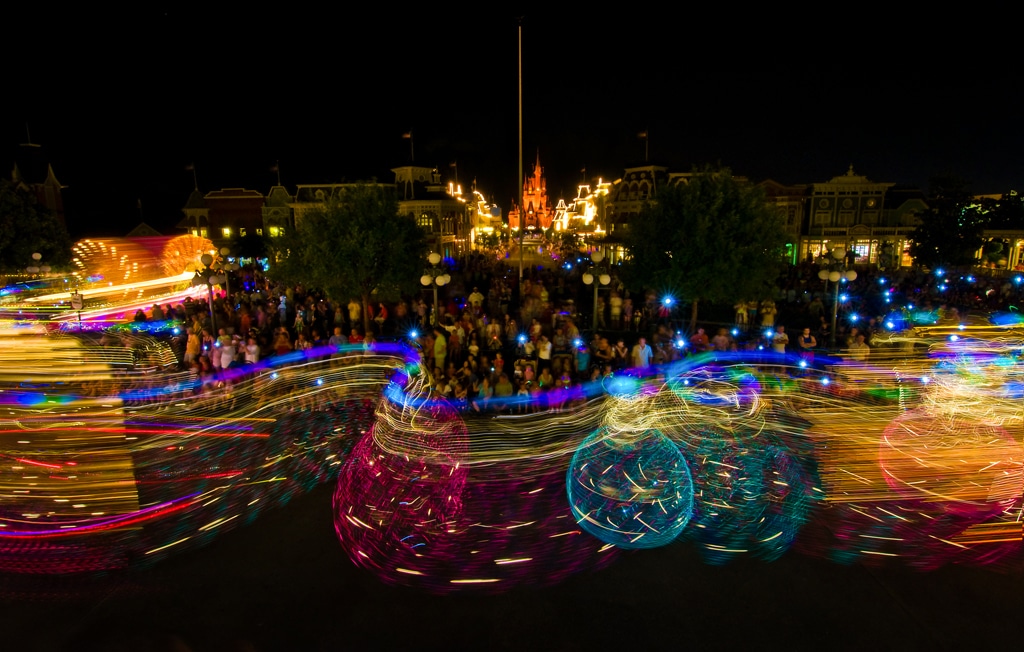
It probably goes without saying, but costs relative to enjoyment can also vary. In the case of the aforementioned Yosemite hike, I’d pay $1,000 right now to be instantly transported back to that moment. Heck, I’d give the same amount to watch SpectroMagic one more time! Value is nebulous, and probably the best way to assess it is not comparatively, but after the fact.
With the benefit of hindsight, would you pay that much to have done it for the first time? What would you pay to do it again? The answers are going to vary from person to person, and just because someone derives pleasure from a nearly-free book or hike doesn’t mean that a much more expensive concert or theme park visit is not worth it to them.
As a parent to a toddler, my perspective on value is already shifting, and there are so many priceless family memories we’ve already made at a number of places–but disproportionately Disney. While we do have a ceiling on what we’d pay for that per day, it’s far higher than what we’re currently paying. Similar sentiment among Disney’s bread and butter demographic of young families is likely how they “get away with” annual price increases!

Ultimately, it’s fair to say that Walt Disney World and Disneyland are neither the best nor the worst values in entertainment when you attempt an objective measure. As far as in-person experiences go, they’re about middle of the pack–more expensive than regular parks, movies, and museums.
They’re also less expensive than most sporting events, regular concerts, Broadway shows, and Taylor Swift or Beyonce concerts. For the reasons discussed above, objective measures don’t even begin to tell the full story…to the point that they’re practically pointless!
Not only that, but we haven’t factored in food, which is pretty much a necessity when visiting theme parks or attending a multi-hour experience. It might be a controversial opinion, but I’d argue Disney Parks offer better bang for buck when it comes to fast food as compared to almost anything else–stadiums, concert venues, museums, zoos, etc.

In the end, I suspect that a lot of the complaints about Disney theme parks offering “poor value” come from longtime fans who have seen and felt the trajectory of Walt Disney World and Disneyland prices. I further suspect that the defenders who contend Disney offers “great value” are largely an overcorrection to the critics, or people wanting to justify their own Disney addictions. Honestly, I feel the same…as both groups.
In some cases, Walt Disney World and Disneyland cost twice as much today as they did a decade ago–and that’s after prices came close to doubling in the decade before that. That’s a tough pill to swallow, and while I can empathize with the critics, I also don’t have access to a time machine. There are a number of things that cost significantly more today than years ago, but the market has decided are ‘worth’ more now.
That includes both Walt Disney World and Disneyland, as their attendance today is higher than a decade ago when the parks were cheaper. I might add that this value assessment has been made by all of us who still visit Walt Disney World and Disneyland. Complain as we might about prices, the votes we’ve made with our wallets speak far louder than our words ever could.
Need Disney trip planning tips and comprehensive advice? Make sure to read Disney Parks Vacation Planning Guides, where you can find comprehensive guides to Walt Disney World, Disneyland, and beyond! For Disney updates, discount information, free downloads of our eBooks and wallpapers, and much more, sign up for our FREE email newsletter!
Your Thoughts
Do you think Walt Disney World and Disneyland are good values on a per-hour basis as compared to other entertainment? Is the amount that you’re paying to do Disney higher or lower than $23 per hour? What’s your balking point for a per-hour cost of Walt Disney World or Disneyland? What do you think of the value-proposition of the parks: good, bad or ugly? Any questions? We love hearing from readers, so please share any other thoughts or questions you have in the comments below!