
In honor of the United States 250th Anniversary, TIME Magazine has assembled a list ranking America’s 250 Most Iconic Companies. The list honors the American businesses that have not only been commercially successful, but have shaped our culture and society.
Unsurprisingly, Disney makes the cut. More surprisingly, it does not top the list or even make the top 10. This post shares the list, discusses its methodology, and then shares our list of the Top 25 Most Distinctly American Companies, using strict criteria established by Sam Eagle. We then explain why TIME got it wrong, from our totally unbiased perspective as a Disney blog.
Disney is no stranger to being “snubbed” on lists like this of late. The company’s perception among the American public and business leaders has been in consistent decline since 2019. We’ve discussed how it’s been a rough few years for Disney’s reputation at length, most recently in Disney’s Reputation Falls to Only “Fair” last year.
Before that, we tackled the topic with Is Disney Ruining Its Reputation? and Disney’s Reputation Falls Further covering the company’s self-inflicted brand damage, loss of goodwill, and pricing perception problems. There was also the matter of Disney being ranked as the #1 rip-off last year. Granted, it was a nonsense list–but Disney is finding itself in the crosshairs of coverages like this more often as of late.
Fan concerns about Disney’s tarnished reputation are still front of mind, but we’ve seen the tone and tenor of those change. Look no further than Is Walt Disney World Pricing Out the Middle Class? That was one post in an ongoing series (see Walt Disney World is Worried About Its High Prices).

Suffice to say, reputation and pricing are hot-button issue with Disney fans, and often for good reason. This has spilled out into the mainstream media, where there’s a new article about affordability and Disney seemingly every month in high-profile outlets. This also is understandable.
Disney is among the most distinctly American companies, and it’s something of a bellwether for middle class Americans as a result. So it makes sense for mainstream media like the New York Times or Wall Street Journal, to use Walt Disney World or Disneyland as a proxy for economic anxiety. It makes for a more emotional, compelling and colorful story that simply wouldn’t resonate with readers the same way if Marriott or Hilton or another company were chosen.
Which is a segue into the TIME List of United States’ 250 Most Iconic Companies, which should measure the most distinctly American businesses in the 250 year history of our nation. Let’s dig in…

According to the magazine, TIME and Statista conducted a nationally-representative survey of U.S. residents to rank the 250 American companies that are “not only commercially successful, but have played a vital role in shaping culture and society.”
In honor of the United States Semiquincentennial, the list showcases a comprehensive landscape of companies founded just 30 years after the country itself (Colgate-Palmolive in 1806) as well as 21st century entrants (OpenAI in 2015), many of which are already internationally recognized.
These lists are often meaningless without proper methodology, so let’s start there. According to TIME, a company must have been founded and be headquartered in the United States at least 10 years ago in order to be eligible for inclusion on the list.
This precise verbiage is likely why defunct companies, such as Kodak, do not make the list. And likewise, why those have been acquired and are no longer based in the United States, like Anheuser-Busch, are also not present. (I’m skeptical of these decisions; both businesses belong on any list of the top 250 companies of America’s first 250 years.)

The TIME America’s Most Iconic Companies list is based on an independent survey of more than 10,000 members of the U.S. general population. Respondents were invited to evaluate “iconic” companies from a long-list of relevant American companies and their brands, resulting in the collection of over 100,000 individual assessments.
The TIME and Statista survey included the following assessment criteria:
- High Recognition & Familiarity: The ability to identify a company based on its visual elements, such as its logo, colors, or packaging, without explicitly seeing the company name.
- Cultural Significance and Impact: The extent to which a company’s actions, values, products, or presence influence the beliefs, behaviors, and social norms of a community or society.
- Emotional Connection: The strong feeling or bond individuals develop with a company based on positive experiences, shared values, or trust.
- Resilience: The company’s capacity to adapt to and overcome challenges, including market shifts, internal changes, or external disruptions.
- Americanness: A qualitative judgment of how strongly a company’s brand, culture, operations, and market presence reflect traits commonly associated with U.S. business identity. This can include origin, governance, communication style, design ethos, and public perception to gauge the company’s perceived “Americanness,” rather strict legal or geographic status.

Once the data was collected and evaluated, it was consolidated and weighted within a scoring model. The final score was calculated as follows: 80% of survey results + 20% of market presence. The process of creating the final list included expert verification and quality checks. The 250 companies with the highest scores were ranked and featured on the “America’s Most Iconic Companies 2026” list by TIME and Statista.
The verbiage of the last sentence is curious. Nothing there indicates the companies were ranked in order according to survey results from the aforementioned 10,000 Americans. Just that the top 250 companies from those surveys are the ones featured on the list.
Perhaps I’m reading into this, but I strongly suspect TIME then put together its own rankings from there and is silent as to the editorial process for whatever reason. I also suspect TIME put its thumb on the scale, because otherwise it’s difficult to explain rankings like #13, #15 (especially), #25, etc.

With methodology out of the way, here’s a look at the top 25 from the TIME list of America’s 250 Most Iconic Companies:
- Ford Motor Company
- Apple
- The Coca-Cola Company
- Walmart
- Amazon
- McDonald’s
- General Motors
- Microsoft
- Nike
- The Walt Disney Company
- PepsiCo
- Oracle
- The Hershey Company
- OpenAI
- Cisco
- Dairy Queen
- Costco
- Chick-fil-A
- Etsy
- The Children’s Place
- Target
- Starbucks
- Levi Strauss & Co.
- MyFitnessPal
I swear some of these are just catnip for controversy and ‘response’ articles like this one (so it seems I’ve played right into TIME’s hand). But part of the reason why I take issue with the Disney ranking is because TIME’s full list of America’s Most Iconic Companies is actually pretty good. There are just a few questionable choices, probably meant to stir things up.
Nevertheless, if I asked my grandparents to name the 250 most iconic American companies, Oracle and Cisco aren’t making their lists. They’re asking “what’s an OpenAI?” and probably questioning a few other tech companies newer than the 1990s. Nevermind the notion of a fitness app in the top 25. (Name a less iconic duo than “America” and “fitness.”)
Meanwhile, their eyes still light up when talking about Walt coming onto their television sets some seven decades ago.

Disney is actually one of the companies that TIME featured when discussing its ranks. From their list:
The U.S. media and entertainment industry is the largest in the world, according to the International Trade Administration, and Disney (no. 11) is one of the biggest defining names in the business, combining art and technology to pioneer modern animation. The centenarian company, renowned for exporting American storytelling, has transformed into a media and experiential giant, capturing and reflecting the country’s traditions and ideals of optimism, ambition, and invention across the eras, and influencing popular culture globally.
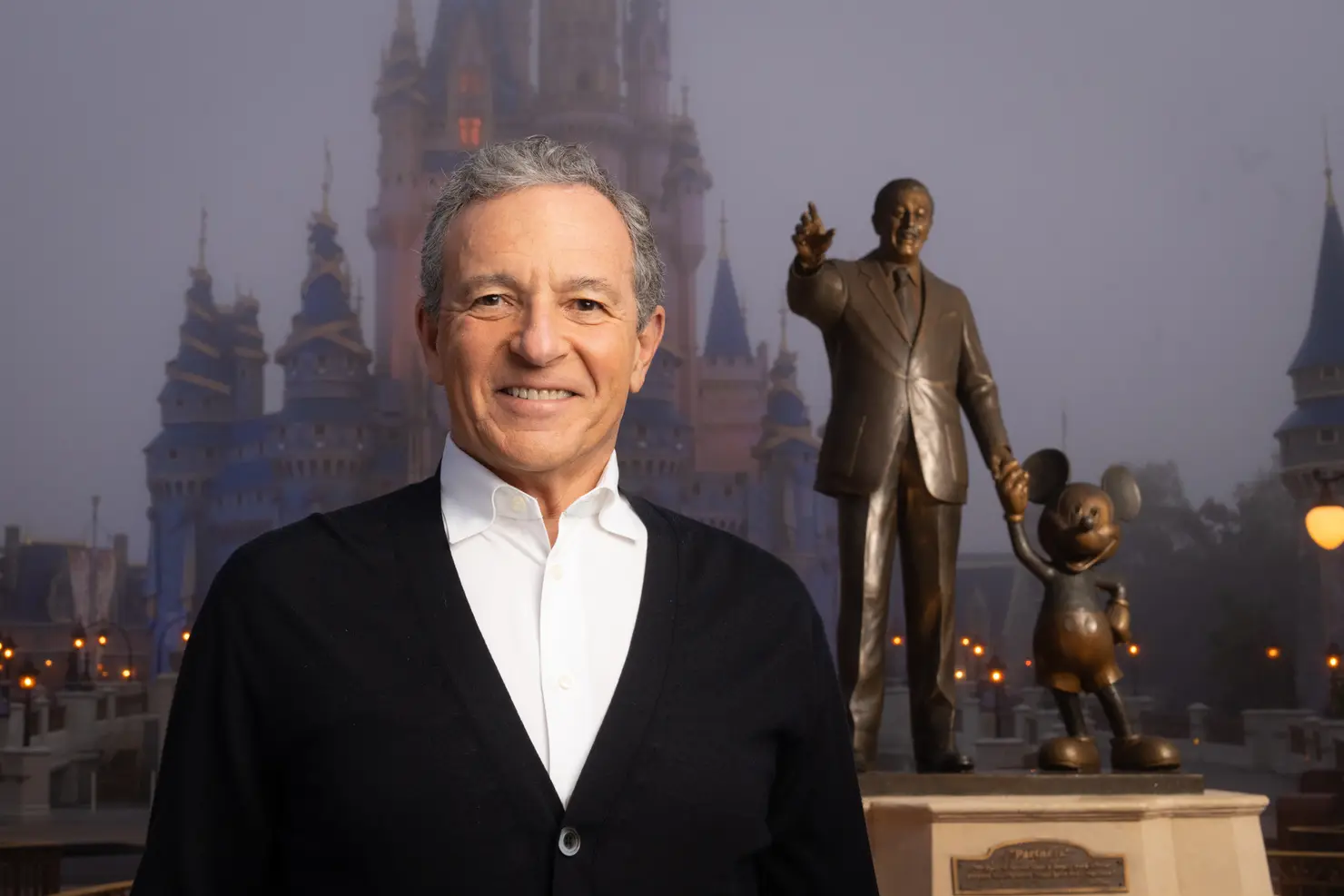
“For over a century, Disney has been woven into the American story, with beloved characters and timeless tales that have brought magic, joy and wonder to generations,” says Bob Iger, CEO of The Walt Disney Company. “Walt Disney’s enduring vision for this great company remains our inspiration, shaping the creativity, curiosity and innovation that fuel our storytelling today. The dreams Walt envisioned for Disney continue to grow, taking us into the future and pushing the boundaries of what is possible for generations to come.”
Here’s how my own list would differ:
- The Walt Disney Company
- The Coca-Cola Company
- Ford Motor Company
- Walmart
- McDonald’s
- Amazon
- Anheuser-Busch
- Kellogg
- Apple
- Harley-Davidson
- Levi Strauss & Co.
- PepsiCo
- General Motors
- Nike
- John Deere
- Meta (Facebook)
- Microsoft
- Campbell’s
- The Hershey Company
- Johnson & Johnson
- Target
- Starbucks
- Jeep
- Kodak
This is the list of a person born in the 1980s and alive in 2026, but I’ve done my best to take a longer view of the companies that have been influential and iconic for generations. Ones that would make not just my list, but also that of my grandparents. To that end, it might still need a few older entries like Colgate-Palmolive, Procter & Gamble, Black & Decker, AT&T, and other companies with ampersands in their names.
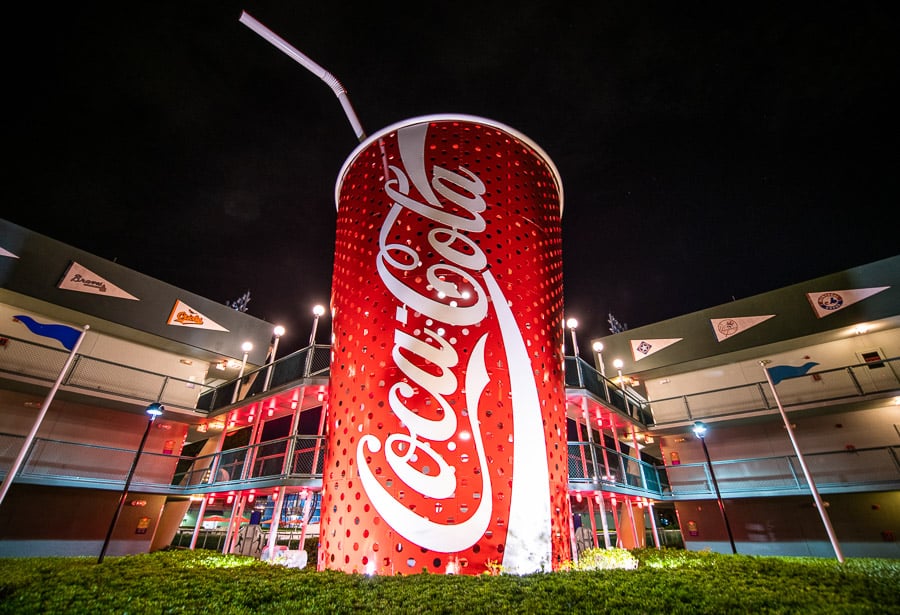
My original draft of this list had Coca-Cola in the top slot, as the accessibility and ubiquity of Coca-Cola along with its status in advertising, etc., makes it tough to top. But then I took a step back and came to the conclusion that I was trying to overcompensate for my “bias” as a Disney blog.
The bottom line is that Coca-Cola is one iconic product, or maybe two if you’re a big-time Diet Coke fan. Mickey Mouse alone could arguably go toe-to-toe with a red bottle of Coca-Cola. That’s before you take into account everything from Snow White to Little Mermaid to Frozen to Disneyland to Walt Disney World to the Disney Channel to Disney+ to ABC…to Walt Disney himself as an American original. (Is there a more enduring business executive in the last 250 years than Walt?! His influence continues to ripple across time, decades after his death.)
The Coca-Cola Company is iconic. Its soft drinks have been exported all over the world, for better or worse. But compared to Disney, it’s a one-trick pony. The same goes for Ford and other companies that are otherwise well-deserving of their spots at the top. Sure, Ford has multiple models of motor vehicles, but at the end of the day, that’s it. Same story for McDonald’s and other distinctly American companies with global footprints.

Meanwhile, Disney is responsible for everything from Mickey Mouse to consumer products to movies to television shows to theme parks. It’s breadth is unrivaled. The company’s characters are everywhere, and the brand is accessible around the globe in so many different ways and for over 100 years. Culture is America’s #1 export, and no company has been as dominant as Disney. The company might as well be synonymous with Americana.
Even if we limit to the impact within the United States, it’s hard to argue for anything but Disney in the top spot. Although there are few people who have never drank a Coca-Cola, there are plenty who don’t like it–or prefer Pepsi. There are even more who have never owned or driven a Ford.
How many Americans born in the last 100 years have not taken the time to watch a Disney movie, short or show? How many hundreds of millions have visited a Disney theme park? And what percentage of those have felt powerful emotions in response to what they saw or experienced? Pretty much everyone who has ever had kids or been a child themselves. (So…pretty much everyone.)

Ultimately, that’s precisely why Disney is #1 for me, and by a rather wide margin. Disney’s characters have been omnipresent in American childhood for decades–from the ones that are 100 years old to those that have only been around for a decade.
Everyone has seen the shorts, movies, shows–and probably has one that moved them to tears. Making the pilgrimage to Disneyland or Walt Disney World has been a middle class rite-of-passage for 70 years. No company tugs at the heartstrings like Disney, dominating the memories and nostalgia of so many. Americans have a certain sentimentality for Ford, Coke, McDonald’s and more–but it’s nothing like what we have for Disney.
Much has been made about the Walt Disney Company’s reputation dropping over the last several years, and it’s fair to say that Disney no longer enjoys the absolute stranglehold on the American childhood and pop culture that it once did. But that’s all contemporaneous, based on fleeting perceptions at this moment in time. Zoom out a bit, and look back at the last 100 years of characters and creative output. Nothing comes even remotely close to having the strength and longevity of what Disney has done.
But it’s precisely because Disney does elicit such a powerful emotional response among so many Americans that this is even a concern or topic of conversation in the first place. Is there anyone on Coca-Cola or Walmart fan sites arguing about its recent business decisions?
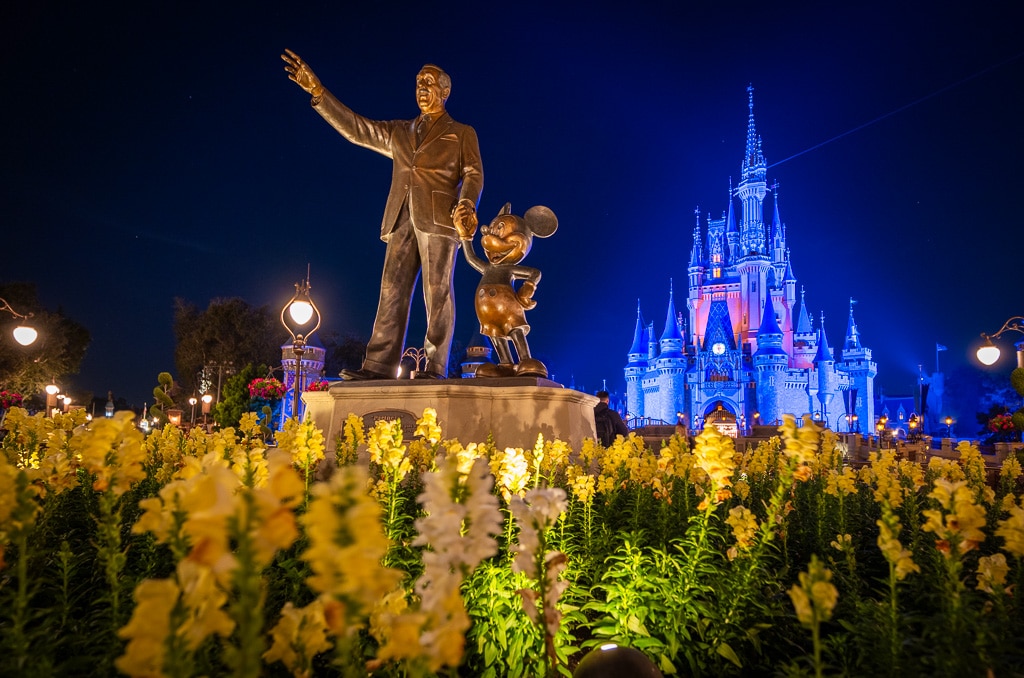
We may argue breathlessly about the Walt Disney Company’s dubious decisions, big and small, and worry that it’s headed in the wrong direction. But zoom out a bit, and it’s easy to understand why. It’s because of that strong emotional connection and rich 100-year history as the dominant symbol of American childhood and pop culture that we even care in the first place!
There’s a reason why first-timers still flock to Walt Disney World and Disneyland despite ever-increasing costs, why Disney Adults are a cultural phenomenon, and why we’re all here debating this stuff–because we do not want to see Disney end up like Kodak or Anheuser-Busch. Disney is the #1 company in the United States’ 250 year history, and honestly, I don’t even see how there’s any debate about this.
Need Disney trip planning tips and comprehensive advice? Make sure to read Disney & Universal Vacation Planning Guides, where you can find comprehensive guides to Walt Disney World, Disneyland, Universal Orlando & Hollywood, and beyond! For news & rumors, on-the-ground updates, discount information, free downloads of our eBooks, and much more, sign up for our FREE email newsletter!
YOUR THOUGHTS
What’s your take on Disney’s spot on the TIME List of America’s 250 Most Iconic Companies? Think Disney deserves a higher spot…or would you argue for an even lower one? What’s your #1 most distinctly American company–not just of 2026, but of the last 250 years? Do you agree or disagree with our assessment? Any questions we can help you answer? Hearing your feedback—even when you disagree with us—is both interesting to us and helpful to other readers, so please share your thoughts below in the comments!