

Orlando Airport and Visit Florida recently published their stats for the last calendar year, with both reporting strong despite decreases in international travelers and at Walt Disney World. Here’s a look at the MCO and statewide tourist numbers, how this compares and contrasts with what WDW has shared, and attempts to reconcile the results.
Let’s start with the preliminary estimates from Visit Florida, which indicate that the Sunshine State welcomed 143.3 million visitors in 2025, making for another record-setting year for Florida. In the fourth quarter alone, an estimated 33.5 million visitors traveled to the state, making it the highest fourth quarter visitation on record.
Domestic travelers accounted for 91.5% of all visitors in 2025, with 131.1 million Americans traveling to Florida. Overseas visitation reached 9.3 million, while Canadian visitation totaled 2.9 million, which was “consistent with historical trends” where Canadian travel represents approximately 2% of total visitation according to Visit Florida (more on that below).
Florida also experienced continued growth from key international markets, with strong increases from Latin American countries such as Brazil and Argentina, as well as European markets including the United Kingdom, France, Spain, Italy, and the Netherlands. Brazil is now the second-largest international source of visitors to the state.
According to Visit Florida, the Sunshine State continues to be the #1 domestic travel destination in the United States and a top choice for international visitors. Florida attributes the growth to strategic investments in communities that promote job growth, bolster small businesses, and fortify infrastructure. All cementing Florida’s place as a leading travel destination, both nationally and internationally.
Key highlights from Visit Florida’s fourth quarter and calendar year 2025 visitation estimates are below:

Q4 2025
- Preliminary estimates indicate that 33.5 million total visitors (in person-trips) traveled to Florida in the fourth quarter (Q4) of 2025, a +0.6% increase from Q4 2024 and a record high for a fourth quarter.
- In Q4 2025, Domestic visitation is estimated at 30.31 million, and international visitation is estimated at 3.2 million.
- Domestic visitors accounted for 90.5% of total visitors, while international visitors accounted for 9.5%.
- Total enplanements at 19 Florida airports totaled 27.4 million in Q4 2025, up by +2.8% from Q4 2024.
Calendar Year 2025
- Preliminary estimates indicate that 143.3 million total visitors (in person-trips) traveled to Florida in calendar year (CY) 2025, a +0.2% increase from CY 2024.
- Domestic visitation accounted for 91.5% of total visitation in 2025, up slightly from 91.4% the previous year, while overseas visitation made up 6.5% and Canadian visitation made up 2.0%, in line with historical visitation records.
- Domestic visitation is estimated at 131.1 million in 2025, an increase of +0.3% from 2024. Overseas visitation is estimated at 9.3 million, with Canadian visitation at 2.9 million.
- Florida saw growth across all top 5 overseas origin countries year over year. Brazil grew 10.4% from 2024, Argentina grew 17.8% and Spain entered the top 10 origin countries with 10.4% growth in visitors.
- Preliminary estimates indicate an air/non-air split for domestic visitors of 35.8% / 64.2% in 2025, with a smaller share traveling to Florida by air than in 2024.

International Travel Decreases
International visitation was addressed by Disney on a couple of earnings calls last year, one of which indicated that Walt Disney World and Disneyland had “seen a bit of an impact” of roughly 1% to 1.5% in an international downtrend.
At the time, what Disney expected going forward was similar to that, pointing out that they were “more than making up for it with domestic attendance–attendance at the parks has been terrific.” It would seem that this more or less mirrors the stats for Florida, as a whole.
During Disney’s most recent earnings call just last month, the company warned of international visitation “headwinds” and a looming slowdown in the forward guidance. No numbers were given, but the tone suggested the international decrease had deepened year-over-year. As a result of this, Walt Disney World pivoted its marketing and sales efforts to focus on more of a domestic audience in order to keep attendance and occupancy rates high.

We’ve theorized that the slowdown among international attendees might hit Walt Disney World harder in 2026 than last year, due to the lag between booking and traveling. The best international promos are released a full year in advance and were locked-in long before the international tensions emerged, and visitors are less likely to cancel an existing trip that’s on the books than they are to not book a future one. Based on forward guidance, it appears this lagged international slowdown thesis is correct.
Even so, many other markets already saw major international decreases last year. As a whole, the United States registered a 6% drop in foreign visitors in 2025 even as global tourism saw a 6.7% rise in spending compared to the previous year, according to data from the World Travel and Tourism Council.
The global tourism industry is expected to grow 4.5% in 2026, per WTTC projections. Destinations in Europe and Asia are expected to see double-digit growth, fueled in part by tourists shifting plans from the United States to other destinations.

That data illustrates that Florida has not been hit as hard as the rest of the country.
Anecdotally, international visitors seem less inclined to give up rite of passage theme park trips or beach vacations than those to major metros. Honestly, I would’ve expected a far greater drop in international visitation. Divergent visitor demographics between Florida and New York or California, for example, might also play a part.
For Florida, visitors from Latin American countries are picking up the slack. We’re not the least bit surprised by that growth as, anecdotally, our on-the-ground experience has been that the tour groups are back in full force. That’s arguably the real story here, that the significant gains from Latin America have masked marked decreases elsewhere.

Canada Consistent…or Down?
It’s worth noting that there’s a bit of spin with the Canadian numbers, which Florida indicates are “consistent with historical trends” at 2.0% or 2.9 million visitors. If you look elsewhere, you might see data suggesting a double-digit decline.
It all depends on the frame of reference. Canadian visitation totaled 3.3 million in 2024, which was up by +1.2% over 2023. The reflected the ongoing COVID recovery, with international visitors being slower to return than domestic one, which at least in part also explains the continued growth from other markets in 2025. Canadian visitation was still down as of 2024 by 20.0% from 2019.
From our perspective, a drop of from 3.3 million to 2.9 million visitors year-over-year, especially when the trajectory otherwise would’ve been modest growth, is fairly noteworthy. It’s certainly not as hard-hit as some cities and other domestic destinations, but wouldn’t have been the expected outcome as of early last year, before Canadians Started Canceling Walt Disney World Vacations.
At the same time, the baseline number was low, the drop wasn’t that steep, and it was more than offset by other visitors. Consequently, the ultimate impact on Florida and Walt Disney World was not significant. Even as cancellations or non-bookings accelerate in 2026, it’s once again unlikely to be an appreciable decrease in crowds, unless accompanied by a domestic downturn or decline from Latin America.

Greater Orlando Aviation Authority Stats
At Orlando International Airport (MCO), passenger traffic increased 2.5% for the month of December with domestic traffic up 2.2%. International passenger traffic increased 4.2%, resulting in MCO’s busiest ever month for international traffic, with more than 800,000 international passengers for the first time ever. It also continued MCO’s impressive run of 57 consecutive months of international traffic growth.
The rolling 12-month total for MCO was 57.7 million passengers, up 0.8% year over year, with an average more than 158,000 passengers per day. This number was in-line with 2023, which set the all-time record for MCO passenger volume.
In total for the year, MCO reported 49.22 million domestic passengers, down 0.36% year over year, along with 8.45 million international passengers, an increase of 8.2%.
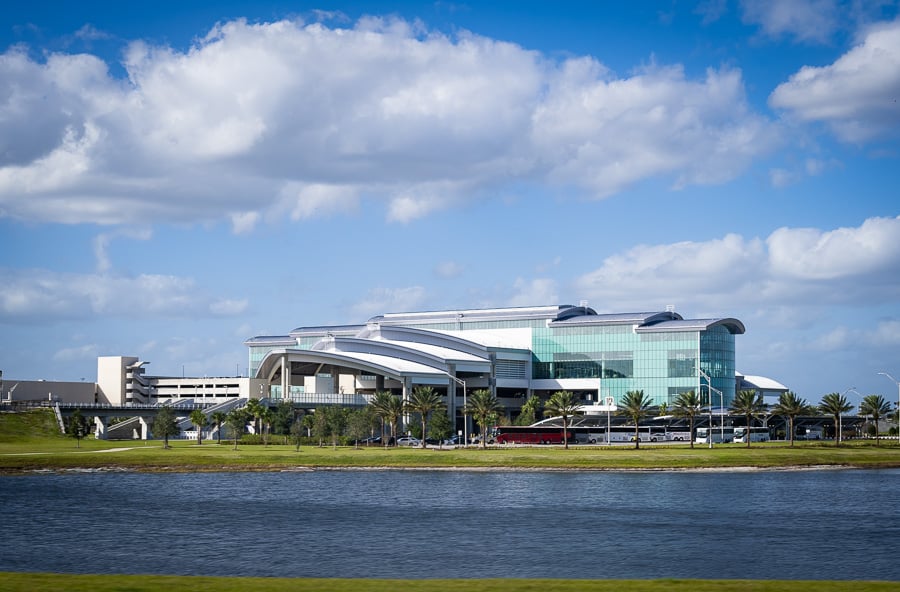
For the last couple of years, MCO has largely been treading water. The GOAA originally forecast a record-breaking 60 million passengers in 2024, or a 10% increase from 2023’s record 57.7 million passengers. Due to a slowdown in the second half of the year, the actual number ended up being 57,211,628.
In part, these numbers are due to infrastructure. Both the addition of the new Terminal C, which has given the airport a higher ceiling, and capacity limitations, which have prevented MCO from meeting organic demand during periods of higher travel. This is a big driver behind Orlando International Airport’s Big $6 Billion Expansion & Enhancement Plan.
In other words, MCO already hit an all-time record thanks to the added capacity of Terminal C, but the airport is still struggling to keep up with demand during peak periods. I don’t know if it could’ve hit 60 million when pent-up demand was running hot, but this is largely a story of infrastructure.
Another consideration here is the explosive population growth in Central Florida. While the focus is on tourism here, there’s also the obvious reality that locals also use airports, and more people living around Orlando means more people using the airport.
That almost certainly has a bigger impact on domestic data than international, but Floridians do travel abroad–and there’s also a surprisingly large number of people from Brazil, Canada, etc. with second homes in Central Florida. Portuguese was the dominant second language in our subdivision when we lived near Walt Disney World.

Walt Disney World Stats
During the last fiscal year (not calendar year), Disney’s 10-K revealed that attendance was down 1% year over year at the domestic theme parks. There’s no breakdown between Walt Disney World and Disneyland, but we assume the drop was disproportionately in Florida for the following reason.
If we also take a look at Disney’s 10-Q for the first quarter of the 2026 fiscal year, which is the last quarter of the 2025 calendar year, it showed that attendance was up 1% year over year. This contrasts both the same quarter in the previous year, when attendance was down 2%.
The background here is Hurricanes Helene and Milton at the beginning of the 2025 fiscal year, the latter of which caused the parks to close and had a long tail of lower crowds due to cancellations in the days and weeks afterwards. The adverse impact of the hurricanes was $120 million on operating income, and Disney also attributed the 2% quarterly decrease to these hurricanes.

Once you adjust from Disney’s fiscal year to the 2025 calendar year, attendance at the parks was basically flat. This is not fuzzy math–it’s what the company’s leadership has stated on earnings calls.
This isn’t a huge surprise, and is more or less what we’re expecting once the annual TEA attendance report is released. (For 2024, see Walt Disney World Attendance Rises Slightly as Universal Orlando Deepens Drop.)
Disney’s regulatory filings separately report resort occupancy, which increased from 85% to 87% at Walt Disney World and Disneyland. Since there are exponentially more Disney-owned hotels in Florida than California, this is largely a story of Walt Disney World’s strength.

It’s also worth noting here that not only did Universal open Epic Universe, but they also launched 3 new hotels during that period. Even beyond the two theme park operators, there has been significant hotel growth in Orange County, as reflected in increased tourist occupancy tax collections, which have also been setting records.
Given that, it’s especially impressive that Walt Disney World managed to increase occupancy. Our strong suspicion was that this was driven by aggressive discounting, especially over the summer months when there was–and still is–room for improvement. In terms of overall revenue (driven by guest spending gains), Walt Disney World has now reported record results in the last three quarters despite the opening of Epic Universe.
Disney was asked about the impact of Universal Orlando’s new theme park during a recent earnings call. Here’s what the CFO had to say: “We’ve talked about Epic Universe in the past as something that we knew was going to be a factor in domestic parks and, in fact, it was very much in line with our expectations. If anything, it seems to be impacting the rest of the competition down in Florida more than it’s impacting us. From a consumer perspective, we certainly feel good about it.”

Universal Orlando Stats
Meanwhile, Comcast’s recent earnings calls have expressed excitement and optimism for that new park’s opening, while also hinting at some of the same issues (capacity and reliability) that we’ve been discussing for a while (see Why You Should Skip Epic Universe Until 2026).
Comcast’s Theme Parks segment reported $2.893 billion in revenue for the final three months of last year, up 21.9% from the same period in 2024. For the year, Comcast reported $9.836 billion in revenue for its parks segment in 2025, up 14.2% from 2024. Epic Universe wasn’t up for the whole year, and has been scaling up, so expect increases well above 22% in the upcoming quarter or two.
As with Disney, the above are combined numbers between both coasts, and Comcast reported that Universal Studios Hollywood actually dragged down results–meaning the growth in Orlando was even stronger than suggested by the numbers. “The opening of Epic Universe is already acting as a catalyst across Orlando, driving longer stays, higher per cap spending, and increased demand across our parks and hotels, reinforcing the attractive returns we see from continued investment in this business,” shared Comcast Co-CEO Brian L. Roberts.

Universal’s impressive growth is partly due to favorable comparisons. For each of the two previous years, both parks at Universal Orlando had sharp attendance decreases (-9.3% for both parks in 2023; -2.5% and -5.5% in 2024).
It’ll be interesting to see how 2025 attendance fares at Universal Studios Florida and Islands of Adventure now that Epic Universe is open. Historically, new gates have come at the short term expense of existing ones, meaning another decrease at IoA and USF would be consistent with past precedent.
However, Universal used a bold strategy that largely bundled Epic Universe access into multi-day packages that “forced” guests to visit the legacy parks. There’s also the fact that Epic Universe doesn’t have Annual Passes, and Universal Orlando has a large local fanbase.
We’ll have to wait until the TEA report for Universal’s numbers, as Comcast doesn’t share specific park attendance numbers on earnings calls. We suspect they would be boasting about it if that bundled strategy were paying off in spectacular fashion, though.
Regardless, Universal Orlando definitely grew marketshare, meaning that the gains of Epic Universe were higher than potential losses at the other gates. That’s to be expected. Comcast wouldn’t have spent $7 billion on a new theme park to tread water.
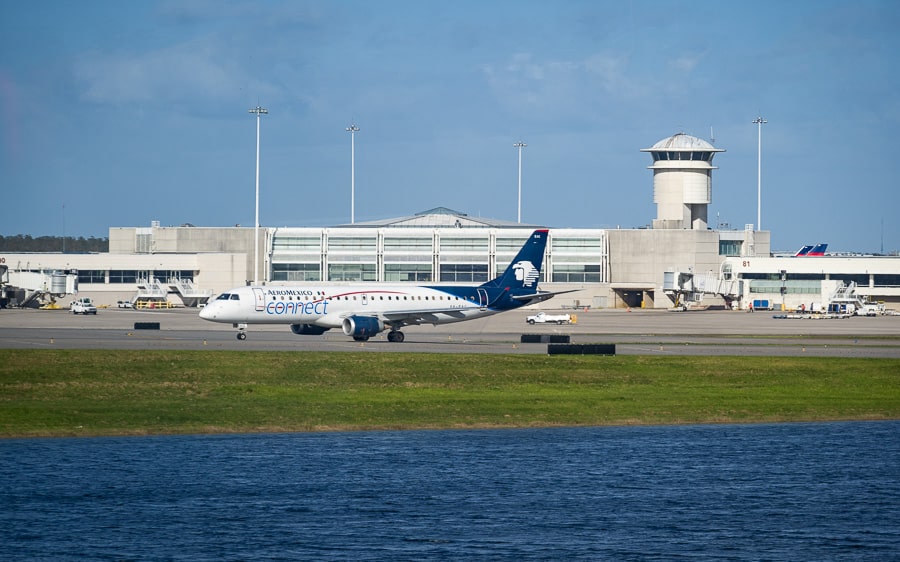
Ultimately, Florida reported record visitor numbers last year, but it wasn’t as if they smashed the previous year’s results; overall, it was an increase of 0.2%. That was despite a notable drop from Canada, which was in turn offset by big gains from major overseas markets and domestic travelers.
MCO’s continued growth of international passengers is puzzling. That 8.2% year over year increase is a big gain, and it’s not as if that was driven by an easy comparison–international traffic has grown for 57 consecutive months! This is also higher than Florida as a whole, suggesting that Orlando is outperforming the statewide stats.
The best explanation for MCO’s growth is the new terminal, but that’s still impressive. Added capacity doesn’t result in record numbers unless there’s also demand. (One possibility is that they’re not all tourists; that the aforementioned individuals with second homes in Central Florida are more likely to travel to and from the Sunshine State when there are more routes and prices are reasonable.)

One interesting and under-discussed angle is Florida’s popularity as a budget-friendly destination for domestic travelers. This is touched upon briefly in the Visit Florida announcement, but in an odd way that touts their marketing efforts. We presume this to be true across the board for Florida tourism, which might be counterintuitive given the high costs of visiting Walt Disney World.
Keep in mind that Florida also has beaches, and that the Sunshine State is just a massive draw in general, beyond theme parks (heresy to some of us parks fans, I know).
Meaning it’s entirely possible that Florida is seeing an influx of budget-minded travelers even as a middle class pullback in consumer spending occurs on travel, as the state also has many economical vacation options.

This isn’t entirely theoretical. As discussed in Rich Rescue Walt Disney World from Spending Slump, data revealed that lower and middle-income Americans spent less at regional theme parks and attractions last summer, trading down for more budget-friendly trips–like beaches.
Meanwhile, affluent travelers spent more than before at pricier Disney and Universal destinations. Suffice to say, the two big players in theme parks and Florida’s budget destinations might be performing strongly, even as mid-tier attractions feel the squeeze.
Planning a Walt Disney World trip? Learn about hotels on our Walt Disney World Hotels Reviews page. For where to eat, read our Walt Disney World Restaurant Reviews. To save money on tickets or determine which type to buy, read our Tips for Saving Money on Walt Disney World Tickets post. Our What to Pack for Disney Trips post takes a unique look at clever items to take. For what to do and when to do it, our Walt Disney World Ride Guides will help. For comprehensive advice, the best place to start is our Walt Disney World Trip Planning Guide for everything you need to know!
YOUR THOUGHTS
What do you think of the Visit Florida and Orlando Airport stats for last year? Surprised by anything in the data? Interested to see final attendance figures for Walt Disney World and Universal Orlando? Agree or disagree with any of our analysis? Any questions we can help you answer? Hearing your feedback–even when you disagree with us–is both interesting to us and helpful to other readers, so please share your thoughts below in the comments!